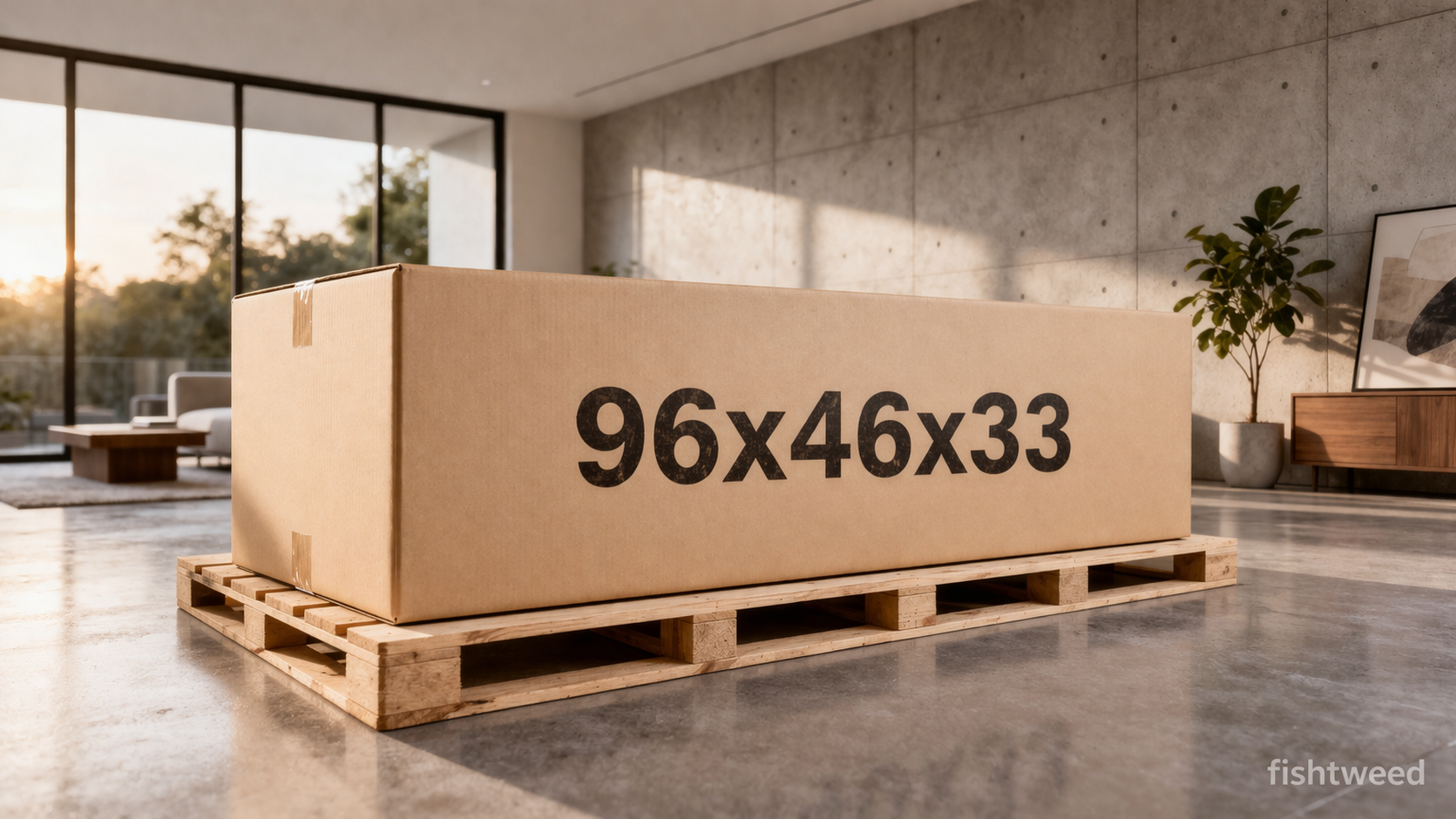
At first glance, “96x46x33” looks like a random combination of numbers. It could easily be mistaken for a product code or a technical label with little meaning. But in reality, this format almost always represents something far more practical: dimensions.
In everyday life, dimensions guide important decisions. They determine whether a piece of furniture fits into a room, whether a package qualifies for standard shipping, and whether a product can move through a supply chain efficiently. So when someone searches for “96x46x33,” they are usually trying to solve a real-world problem.
Most commonly, this format refers to length, width, and height. When measured in inches, 96x46x33 describes a large object. It is eight feet long, nearly four feet wide, and just under three feet tall. That is not a small or casual size. It suggests something substantial, something that requires planning.
What 96x46x33 Actually Represents
To understand this dimension clearly, it helps to visualize it. A length of 96 inches equals eight feet, which is roughly the length of a large dining table or a long workbench. A width of 46 inches gives it a deep surface, wider than most desks. A height of 33 inches places it around the level of a table or counter.
When combined, these measurements create a strong physical presence. This is not an item that blends quietly into a corner. It commands space. Whether it is a table, a crate, or a custom-built structure, it is designed to be noticed and used.
The volume of an object with these dimensions is also significant. It occupies over 80 cubic feet, which makes it a major factor in both storage and transportation decisions. In simple terms, it takes up space, and space has value.
Why This Dimension Matters in Shipping
In logistics, dimensions are not just descriptive. They are financial.
Shipping companies no longer rely only on weight to calculate costs. Instead, they often use dimensional weight, which considers how much space a package occupies. This means that even if an object is relatively light, a size like 96x46x33 can lead to higher shipping charges.
This dimension also pushes a package beyond standard parcel limits. In many cases, anything this large must be handled as freight. That introduces additional steps such as palletization, special handling, and sometimes longer delivery timelines.
For businesses, this has direct consequences. A product that looks profitable on paper can lose margin once shipping costs are calculated correctly. For individuals, it can mean unexpected fees or delivery complications.
Common Uses of 96x46x33 in Real Life
This dimension appears across several industries, often in places where size and function intersect.
In furniture, it may describe a large work table, a display unit, or a custom bench. The height makes it practical for working, while the length offers generous surface area.
In industrial settings, it can represent a shipping crate or a piece of equipment housing. These are designed to protect valuable items during transport while maximizing efficiency.
In workshops, dimensions like this are common for fabrication tables or assembly platforms. The size allows multiple tasks to be performed at once without crowding.
Even in retail and exhibitions, large display structures often follow similar proportions. They are built to attract attention while still remaining functional.
The Impact on Space and Design
Beyond logistics, dimensions like 96x46x33 influence how spaces feel and function.
A piece this size can anchor a room. It can serve as a centerpiece in a studio, a focal point in a showroom, or a functional hub in a workshop. However, it can also overwhelm a smaller space if not planned carefully.
Interior designers often stress the importance of scale. A large item can make a room feel balanced if the surrounding space supports it. But if the room is too tight, the same item can create discomfort and restrict movement.
This is why measuring a space before purchasing or installing something with these dimensions is essential. It is not just about fitting the item in. It is about maintaining flow and usability.
Why Dimensions Like This Are Increasingly Important
In recent years, the rise of online shopping has made dimensions more important than ever. Buyers no longer see products in person before purchasing. Instead, they rely on descriptions and measurements.
This shift has increased the need for clarity. A dimension like 96x46x33 must be understood quickly and accurately. Misinterpreting it can lead to returns, extra costs, and frustration.
At the same time, logistics networks are under pressure to become more efficient. Carriers are paying closer attention to package sizes because space inside trucks and planes is limited. Larger items require more planning and often cost more to move.
As a result, dimensions are no longer a minor detail. They are a key part of decision-making for both businesses and consumers.
How to Evaluate 96x46x33 Before Making a Decision
Whenever you encounter this dimension, it is important to take a moment and interpret it correctly.
First, confirm the unit of measurement. Inches and centimeters create very different realities. A misunderstanding here can completely change your expectations.
Next, consider where the item will be placed. Measure the intended space and compare it with the dimensions. Think about doorways, hallways, and access points.
Then, evaluate transportation. Consider whether the item can be shipped using standard services or if it requires freight handling. This can significantly affect cost and delivery time.
Finally, think about long-term use. Will the item need to be moved later? Will it still fit if the environment changes? Planning ahead can prevent future challenges.
The Bigger Picture Behind a Simple Dimension
At its core, 96x46x33 is more than a measurement. It is a reminder of how physical space shapes our decisions.
Every product, from furniture to industrial equipment, exists within constraints. It must fit somewhere, move somehow, and serve a purpose. Dimensions are the language that connects all of these factors.
When understood correctly, they provide clarity. They help avoid mistakes. They make planning more precise.
And when ignored, they often lead to problems that could have been prevented.
Conclusion
The meaning of 96x46x33 is simple, but its implications are far-reaching. It represents size, space, and the practical realities that come with them.
Whether you are buying furniture, shipping a product, or designing a workspace, this dimension tells you what to expect. It signals that the object is large, that it requires attention, and that it cannot be treated casually.
In a world where efficiency and precision matter more than ever, understanding dimensions is not optional. It is essential.
By taking the time to interpret numbers like 96x46x33 correctly, you make better decisions. You avoid unnecessary costs. And you create solutions that work not just in theory, but in real life.