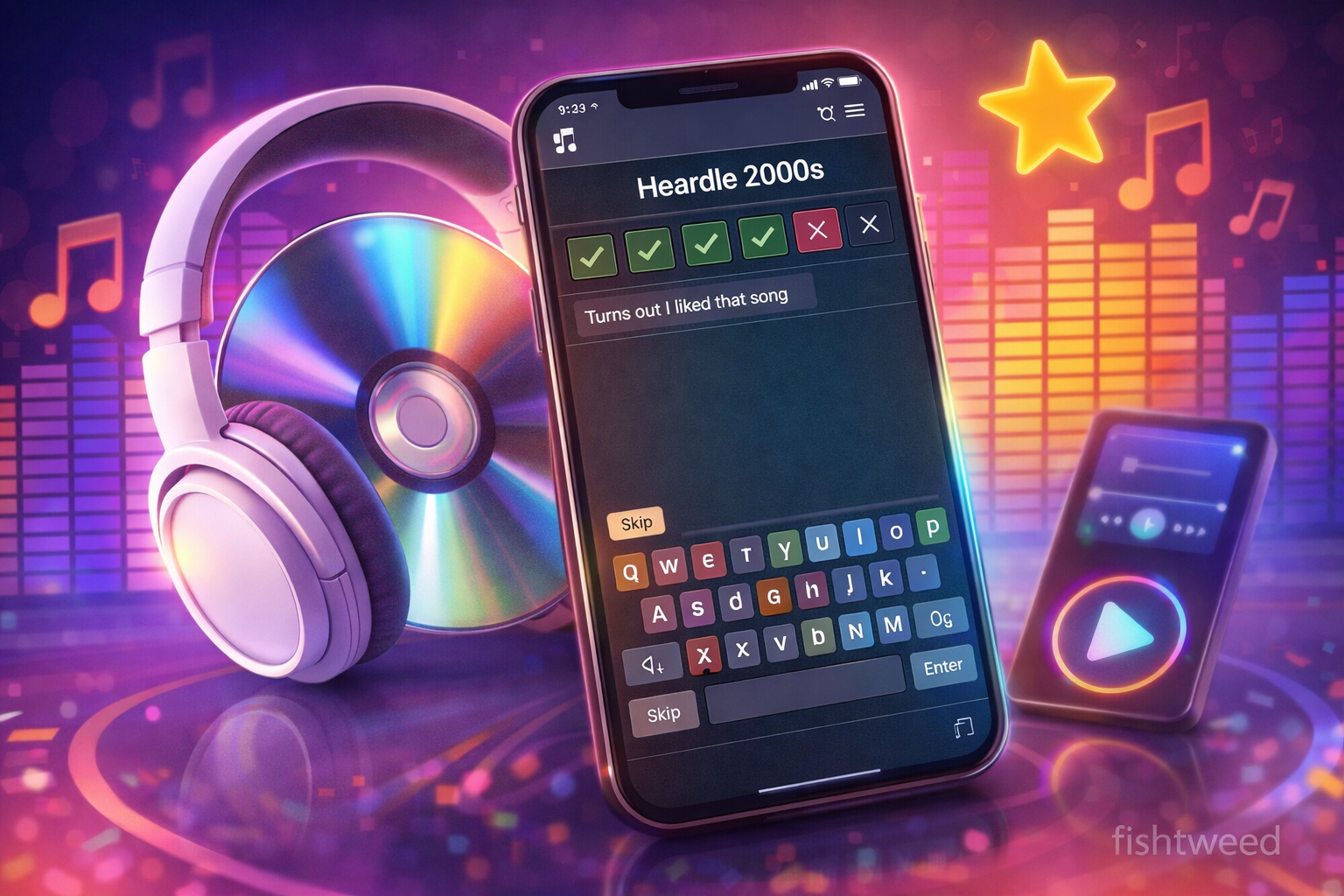
Heardle 2000s isn’t just a game. It’s a daily rush of memory, melody, and millennial nostalgia wrapped into a few seconds of sound. For many players, it feels like stepping back into a bedroom with posters on the wall, an iPod on shuffle, and the unmistakable opening beat of a song that defined an era.
The concept is simple. You hear a short clip from a song released in the 2000s. You guess the title and artist. If you’re wrong, the clip gets longer. You get a limited number of tries. That’s it. Yet the simplicity hides something powerful. Heardle 2000s taps directly into emotion, identity, and cultural memory in a way few online games manage to do.
What Is Heardle 2000s?
Heardle 2000s is a music guessing game inspired by the original Heardle format. The game plays a brief intro from a track released between 2000 and 2009. Players must identify the song using as little audio as possible. With each incorrect guess or skip, a longer portion of the track is revealed.
Unlike traditional trivia games that rely on facts, Heardle 2000s relies on recognition. It tests your ear, your memory, and your connection to the decade’s biggest hits and hidden gems. The faster you identify the track, the more satisfying the win feels.
What makes the 2000s version special is its curated focus. The decade delivered an explosion of genres. Pop evolved. Hip‑hop dominated charts. Emo and pop‑punk defined a generation. R&B blended into mainstream radio. Indie rock carved its own lane. That diversity gives the game depth and unpredictability.
Why the 2000s Make the Perfect Soundtrack for a Game
The 2000s were built for recognition. Producers crafted strong openings because radio play mattered. Songs needed hooks that grabbed attention instantly. Many tracks from that era begin with a signature guitar riff, a drum pattern, or a vocal tag that is instantly recognizable.
Think about how many songs from the 2000s you can identify in under two seconds. That is not an accident. It was a competitive music era shaped by CD sales, ringtone culture, and the early days of digital downloads. Catchiness was currency.
Heardle 2000s leverages that structure. The game works because the songs were engineered to stand out quickly. Even a tiny audio fragment can trigger instant recognition. And when it does, it feels like magic.
The Psychology Behind the Addiction
There is a reason players return every day. Heardle 2000s follows a simple daily challenge format. You get one main puzzle per day. Once it’s done, it’s done. That scarcity creates anticipation.
But the deeper hook is nostalgia. Music is tied strongly to memory. Neuroscience research consistently shows that songs from adolescence and early adulthood carry emotional weight. For many adults today, the 2000s represent middle school dances, first cars, college dorms, and early relationships.
When a familiar intro plays, it does more than activate recognition. It activates identity. You remember not just the song but the version of yourself who loved it.
That emotional reward keeps players engaged. It is not just about being right. It is about reconnecting with a moment in time.
How Heardle 2000s Works in Practice
The structure is straightforward. A player clicks play and hears one second of audio. If they cannot identify the track, they can skip or submit a guess. Each attempt unlocks a longer snippet. Usually, players have up to six attempts.
The goal is to solve the puzzle using the shortest clip possible. Sharing results with friends adds a competitive layer. Even without leaderboards, the simple act of comparing attempts makes the experience social.
The design encourages careful listening. Instead of passively hearing music, players analyze it. They focus on tone, tempo, production style, and instrumentation. A single drum kick can narrow the genre. A synth tone can hint at a specific artist. Over time, players develop sharper listening instincts.
The Social Media Effect
Heardle 2000s thrives in group chats and on social platforms. People post their scores. They debate missed guesses. They laugh about how they failed to recognize a song they once played on repeat.
This shareability gives the game cultural momentum. It becomes a daily conversation starter. Instead of scrolling endlessly through feeds, players engage in something interactive and communal.
Music has always been social. From mixtapes to playlists, sharing songs has been a way to connect. Heardle 2000s updates that tradition for the digital age. It compresses the experience into a short, competitive ritual that fits modern attention spans.
Why Millennials and Gen Z Both Love It
At first glance, the game seems tailored to millennials who grew up in the 2000s. However, it has surprising cross‑generational appeal.
Millennials approach it with direct nostalgia. They lived through the rise of the artists featured in the game. For them, it is memory retrieval.
Gen Z approaches it differently. Many 2000s songs have resurfaced through short‑form video platforms and streaming algorithms. Tracks once played on MP3 players now trend in viral clips. Younger listeners often know the hook but not the title, making the game both fun and educational.
This overlap keeps the audience broad. The 2000s have become a cultural reference point rather than just a time period.
Tips to Improve Your Score
Winning more often requires active listening habits. Instead of focusing only on vocals, pay attention to production cues. Many 2000s hits have distinctive beats or instrumental textures.
Consider the genre first. Is the intro guitar‑driven? Is there a heavy bassline? Is the production polished pop or raw indie rock? Narrowing down style quickly improves guess accuracy.
Also, think about context. Was this a chart‑topping hit? A soundtrack staple? A club anthem? The 2000s had clear musical eras within the decade. Early 2000s pop sounds different from late‑2000s electro‑pop.
Over time, your brain begins recognizing patterns. The game becomes less about guessing and more about connecting dots.
The Cultural Revival of 2000s Music
Streaming platforms have made older music more accessible than ever. Listeners no longer need physical CDs or downloads. Entire catalogs are available instantly. That accessibility has fueled a resurgence of 2000s tracks.
Fashion cycles have also returned Y2K aesthetics to mainstream culture. Low‑rise jeans, metallic tones, and early internet visuals have reappeared. Music follows similar cycles. When style returns, the soundtrack often follows.
Heardle 2000s fits neatly into this revival. It capitalizes on renewed interest while offering a playful format. Instead of simply replaying old songs, players interact with them.
Is Heardle 2000s Still Relevant in 2026?
Absolutely. Daily puzzle culture continues to thrive. Short, repeatable digital experiences fit modern routines. People want something engaging but not overwhelming.
Heardle 2000s offers exactly that balance. It takes less than five minutes yet delivers emotional payoff. It feels productive without feeling like work.
More importantly, music does not expire. The 2000s catalog is vast. As long as people continue rediscovering that era’s hits, the game remains sustainable.
Why It Feels More Personal Than Other Games
Unlike word puzzles or number games, Heardle 2000s is tied to taste. Your score reflects your listening history. When you fail to recognize a track, it feels oddly personal. When you solve it instantly, it feels validating.
That personalization creates attachment. It turns a generic daily challenge into a mirror of your cultural memory. No two players experience the game the same way.
Conclusion
Heardle 2000s is more than a music guessing game. It is a cultural touchpoint that blends nostalgia, competition, and community into a daily ritual. With just a few seconds of audio, it reconnects players to defining moments of their past.
The brilliance lies in its simplicity. A short clip. A guess. A memory unlocked. In an online world filled with endless scrolling and constant updates, Heardle 2000s offers something refreshingly focused.
It reminds us that sometimes all it takes is one second of sound to travel back in time. And that journey, even when it lasts only a minute, is worth taking every single day.