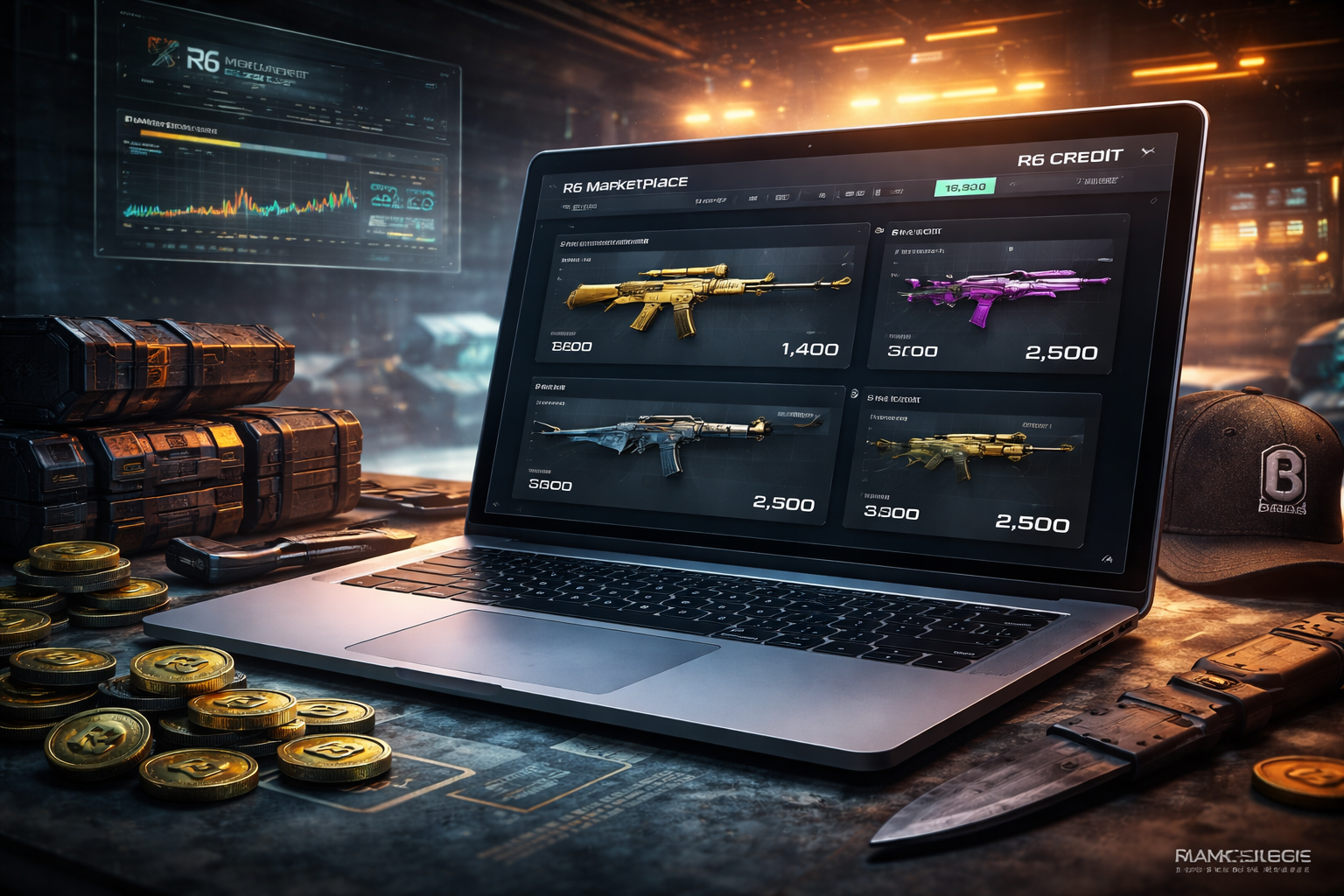
Rainbow Six Siege has evolved far beyond its original tactical shooter roots. Over the years, Ubisoft has continuously introduced new systems to keep the game fresh and engaging for millions of players worldwide. One of the most talked‑about additions in recent years is the R6 Marketplace. This system allows players to buy and sell certain cosmetic items with other players inside Ubisoft’s official ecosystem.
For a long time, many Rainbow Six Siege cosmetics were locked in player inventories forever. If someone owned an item they no longer used, there was no way to exchange it or convert it into something more valuable. The R6 Marketplace changed that dynamic completely. Today, players can trade eligible skins, weapon cosmetics, and other items using R6 Credits in a controlled environment.
The marketplace represents a major shift in how Ubisoft approaches player ownership and the in‑game economy. It also reflects a larger trend across modern online games where cosmetic items are treated almost like digital collectibles. Understanding how the R6 Marketplace works can help players make smarter decisions about their inventory and discover cosmetics they may have missed in previous seasons.
What Is the R6 Marketplace
The R6 Marketplace is an official trading platform created by Ubisoft for Rainbow Six Siege. It allows players to sell certain cosmetic items from their inventory and purchase items listed by other players.
Unlike third‑party trading sites that often exist in the gray market, the R6 Marketplace operates within Ubisoft’s ecosystem. Transactions take place using R6 Credits, which is the premium currency already used in the game for purchasing skins, bundles, and battle passes.
This approach provides a secure environment for trading. Players no longer have to rely on risky unofficial markets that could lead to scams or account bans. Instead, Ubisoft manages the entire transaction process, including item transfers and transaction fees.
The main goal of the marketplace is to give players more control over their cosmetic collections. Items that once sat unused can now be sold, while players who missed older skins can potentially obtain them through other players.
Why Ubisoft Introduced the R6 Marketplace
Ubisoft introduced the marketplace to solve several problems that had existed in the Siege ecosystem for years.
First, many cosmetics in Rainbow Six Siege were time‑limited. Event skins, seasonal bundles, and early battle pass items often disappeared permanently after their release. Players who joined the game later had no way to obtain them.
Second, inventories gradually filled with cosmetics that players rarely used. Without a trading system, those items simply remained locked inside accounts.
By launching the marketplace, Ubisoft created a system where supply and demand could determine the availability and value of certain cosmetics. Players can now sell items they do not want and use the credits to purchase something they prefer.
The introduction of this system also aligns Rainbow Six Siege with other major multiplayer games that have implemented digital item economies. Titles such as Counter‑Strike and several MMO games have demonstrated that player marketplaces can extend the lifespan of cosmetic systems and increase community engagement.
How the R6 Marketplace Works
Using the marketplace is relatively straightforward, but understanding the process helps players avoid confusion.
Players can access the marketplace through their Ubisoft account. Once logged in, they can browse available items or view the cosmetics in their inventory that are eligible for trading.
If a player wants to sell an item, they set a price in R6 Credits and create a listing. When another player agrees to buy the item at that price, the transaction is completed automatically. The seller receives the credits, and the buyer receives the cosmetic item.
Buying items works in a similar way. Players search for specific cosmetics and submit a purchase order at a price they are willing to pay. If a seller lists that item at the same price or lower, the system completes the transaction.
This system creates a simple marketplace environment where players determine prices through supply and demand.
Eligibility and Requirements
Not every Rainbow Six Siege player can access the marketplace immediately. Ubisoft created several requirements to maintain a secure environment.
Players must have a Ubisoft account with two‑factor authentication enabled. This security measure helps protect accounts from unauthorized access, which is particularly important when valuable cosmetic items are involved.
Accounts must also reach a certain in‑game progression level before gaining access to trading features. This requirement helps prevent newly created accounts from being used for fraudulent activity.
Additionally, not every cosmetic item is eligible for trading. Ubisoft determines which items can be sold on the marketplace, usually excluding newly released content for a certain period.
The Role of R6 Credits in the Marketplace
All transactions in the R6 Marketplace are completed using R6 Credits. This means players cannot directly convert marketplace earnings into real‑world money.
When a player sells an item, the credits they receive can only be used inside the Rainbow Six Siege ecosystem. Those credits can be spent on other marketplace purchases, cosmetic bundles, battle passes, or in‑game store items.
Ubisoft also applies a transaction fee to marketplace sales. This fee ensures the platform remains sustainable and prevents excessive speculation within the trading system.
Although the marketplace does not allow players to cash out profits, it still creates meaningful value for players who want to optimize their cosmetic collections.
What Determines the Value of an Item
Not every cosmetic item in Rainbow Six Siege has the same value on the marketplace. Several factors influence pricing.
One of the most important factors is rarity. Cosmetics from limited‑time events or early seasons tend to attract more interest because they are difficult to obtain.
Popularity also plays a role. Skins associated with frequently used operators or iconic weapon designs often receive higher demand.
Visual appeal matters as well. Some cosmetics simply look better than others, which naturally increases their desirability among players.
Finally, nostalgia can influence pricing. Long‑time players often seek cosmetics that represent earlier eras of the game, which can increase demand for older items.
Because the marketplace operates on supply and demand, prices can fluctuate over time depending on player interest.
Benefits of the R6 Marketplace
The marketplace provides several advantages for the Rainbow Six Siege community.
One of the biggest benefits is flexibility. Players are no longer stuck with cosmetics they do not use. Instead, they can sell those items and reinvest the credits into something they actually want.
Another benefit is accessibility. New players can obtain skins from previous seasons that would otherwise be impossible to acquire.
The marketplace also strengthens the sense of ownership players feel toward their collections. Cosmetics become more meaningful when they can be traded rather than permanently locked.
Finally, the system helps maintain interest in the game’s cosmetic ecosystem. Players continue exploring older items and discovering designs that may have been forgotten over time.
Challenges and Limitations
Despite its benefits, the R6 Marketplace is not perfect. Some players feel that the system introduces unnecessary complexity into the cosmetic experience.
Others worry that certain items could become overly expensive if demand becomes too high. When rare skins attract attention from collectors, prices may rise beyond what many players are willing to pay.
There are also concerns about speculation. Some players attempt to predict which cosmetics will increase in value and purchase them in advance. While this behavior is common in digital marketplaces, it can influence price stability.
Ubisoft continues to adjust the system to maintain fairness and prevent abuse, but like any marketplace, it will always reflect the behavior of its participants.
The Future of the R6 Marketplace
The R6 Marketplace is still evolving. Ubisoft is likely to expand the system over time by introducing additional tradable items and refining the trading interface.
As Rainbow Six Siege moves into its next phase of development, the marketplace may become an even more important part of the player experience. The system has the potential to keep older cosmetics relevant and provide players with more control over their collections.
If Ubisoft continues to monitor the economy carefully, the marketplace could remain a healthy feature that supports both collectors and casual players.
Conclusion
The R6 Marketplace represents a major step forward in the evolution of Rainbow Six Siege. By allowing players to trade cosmetic items within an official platform, Ubisoft has created a more flexible and dynamic economy for the game.
Players now have the opportunity to reshape their collections, discover older cosmetics, and interact with the game’s cosmetic history in a new way. Although the system comes with challenges such as fluctuating prices and transaction fees, it ultimately gives the community more control than ever before.
As the game continues to grow, the R6 Marketplace will likely remain a central feature of the Rainbow Six Siege experience. For players who understand how the system works, it offers a valuable opportunity to turn unused cosmetics into something new while exploring the vast catalog of items that Siege has built over the years.