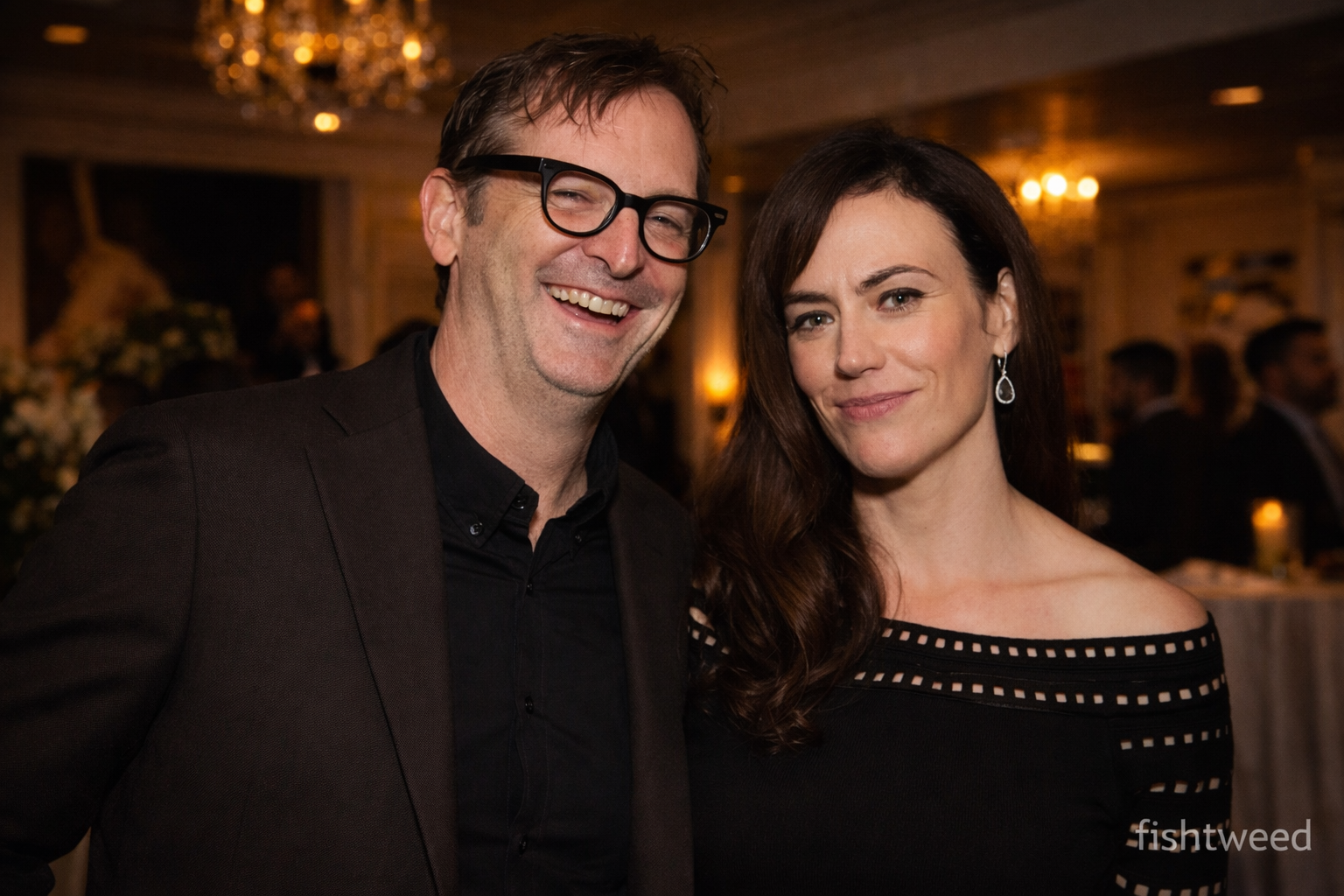
Paul Ratliff remains one of those rare names that draw attention without belonging to a traditional celebrity. Many people search for him because of his connection to actress Maggie Siff, yet the deeper interest often comes from something else: the sense that he lived a thoughtful, private, and meaningful life away from the glare of fame.
In a digital age that rewards visibility, Paul Ratliff has continued to attract curiosity precisely because he seemed to value the opposite. He was known publicly as Maggie Siff’s husband, and public biographical sources also identify him as a therapist. Reports published in entertainment and celebrity-reference outlets further note that he died in 2021 after a battle with brain cancer. Even with those facts now circulating online, much about him still feels personal, restrained, and human.
That is why a biography-style look at Paul Ratliff feels different from a standard celebrity profile. His story is not built around red carpets or public statements. Instead, it is shaped by work, family, privacy, and the quiet dignity of a life that stayed largely outside the spotlight.
Who Was Paul Ratliff?
Paul Ratliff is best known in public search results as the late husband of actress Maggie Siff, who earned wide recognition for her roles in Mad Men, Sons of Anarchy, and Billions. Publicly available biographical listings state that the couple married in 2012 and had a daughter together. Later entertainment coverage reported that Ratliff died in 2021 from brain cancer. citeturn0search0turn0search1
Even so, reducing him to a celebrity spouse does not tell the full story. Public professional listings identify a Paul Ratliff in New York as a marriage and family therapist. That detail is important because it suggests a life centered not on fame, but on helping others navigate emotional complexity, relationships, and personal struggle. citeturn0search2
That professional identity changes how his story should be understood. He appears, at least from the public record, to have built a career grounded in empathy and insight. Those are not qualities that generate headlines easily, but they often define a person’s true influence.
A Life Largely Kept Private
One of the reasons Paul Ratliff continues to interest readers is the simple fact that so little of his life was turned into public performance. There are no sprawling social media archives attached to his name, no stream of interviews, and no carefully managed public persona. That absence makes people more curious, but it also deserves respect.
There is a difference between public interest and public ownership. In Ratliff’s case, the internet offers only a limited portrait, and that limitation tells its own story. He appears to have lived with intention, drawing a line between what belonged to work and family and what belonged to public consumption.
That choice feels increasingly rare. Today, many people become known because they stay visible. Paul Ratliff became known because he was connected to someone famous while remaining mostly private himself. As a result, his biography carries a different tone. It feels less like celebrity news and more like the outline of a thoughtful life glimpsed only in part.
Paul Ratliff and Maggie Siff
The most widely cited part of Paul Ratliff’s public identity is his marriage to Maggie Siff. Public film-industry biographies and entertainment reports state that the pair married in October 2012. They later welcomed a daughter, which gave their relationship an even stronger sense of permanence and family life, though they still kept most personal details out of public view. citeturn0search0turn0search1
That privacy seems central to how they lived. Unlike many public couples, they did not turn their relationship into a visible brand. There was no constant stream of personal disclosures, and very little of their family life was publicly displayed. That may be one reason why people still search for Paul Ratliff today. The relationship existed in the public eye, yet it was never fully absorbed by it.
There is also something compelling about the contrast between their worlds. Maggie Siff’s career required visibility. Acting is, by nature, public. Therapy is nearly the opposite. It depends on discretion, listening, and trust. That contrast makes their story especially interesting, because it joins two very different kinds of professional life under one family roof.
His Professional Life as a Therapist
Public health-directory information identifies Paul Ratliff as a marriage and family therapist in New York. That is one of the clearest details available about his work, and it provides a meaningful lens through which to understand his life. citeturn0search2
Therapists often leave a light public footprint. Their work is not supposed to be visible in the way an actor’s work is. They build trust in private rooms, not on public stages. That means the impact of their lives can be profound even when the broader public knows very little about them.
In Ratliff’s case, that profession gives his biography emotional depth. A therapist spends his career helping other people make sense of conflict, grief, intimacy, identity, and change. Even without long personal interviews or detailed memoir-like material, that work suggests a person committed to understanding human behavior at a deep level.
Some secondary profiles have also described him as having a background in research or design strategy before therapy, though those details are less consistently documented across major public sources. Because of that, the most responsible account focuses on what can be confirmed: he was publicly identified as a therapist, and that professional identity appears central to how he was known outside his family life. citeturn0search2turn0search3
Why His Story Still Resonates
Paul Ratliff’s story resonates because it reflects something many readers feel but rarely see represented online. Not every meaningful life is loud. Not every important person becomes widely documented. Sometimes the people who matter most to those around them are the ones least visible to strangers.
That idea gives his biography an unusual emotional force. Readers do not search for him because of a long catalog of public appearances. They search because his name appears in connection with someone famous, and then they discover a person whose life seems rooted in work, family, and privacy.
There is also the element of loss. The public reports that Ratliff died in 2021 after brain cancer add a layer of sadness to his story. It is one thing to read about a private person connected to fame. It is another to realize that the story carries a real note of grief. That human reality is likely one reason people continue looking him up years later. citeturn0search1
The Challenge of Writing About a Private Person
Writing about someone like Paul Ratliff requires restraint. The modern web often rewards overstatement. It fills gaps with assumptions and turns limited facts into dramatic narratives. But a biography of a private person should do the opposite.
In Ratliff’s case, the known details are meaningful enough on their own. Publicly available sources support the fact that he was married to Maggie Siff, that they had a child, that he worked as a therapist, and that he died in 2021 after brain cancer. Beyond that, much of the online material becomes thinner, less verifiable, or more repetitive. citeturn0search0turn0search1turn0search2
That is why the most honest account is also the most careful one. It recognizes the limits of the record. It does not pretend access where none exists. And it respects the truth that some lives are remembered not because every detail is public, but because the outline alone suggests character.
A Biography Defined by Presence Rather Than Publicity
If there is a central theme in the public understanding of Paul Ratliff, it is this: he seems to have lived as a person of presence rather than publicity. His life appears to have been shaped more by profession and family than by the performance of identity for public audiences.
That matters because biography is not only about events. It is also about atmosphere. Some lives leave behind a feeling as much as a timeline. Ratliff’s public story carries the feeling of steadiness, quiet intelligence, and privacy. Even the limited facts available about him point in that direction.
It is also notable that his name continues to attract attention in an era dominated by oversharing. That suggests many readers are still drawn to figures who seem grounded and real. A private life, when glimpsed from the outside, can sometimes feel more compelling than a fully exposed one.
What Paul Ratliff’s Legacy Suggests
Legacy is often measured in awards, public acclaim, or highly visible accomplishments. Yet not every legacy works that way. Some are carried through personal influence, professional care, and family memory.
For Paul Ratliff, the public record suggests that his legacy lies in the quieter forms of impact. It lies in the people he may have helped through therapy. It lies in the family life he built with Maggie Siff and their daughter. And it lies in the lasting impression left by someone who remained dignified and mostly private even while connected to celebrity culture. citeturn0search0turn0search2
There is something deeply modern about that kind of legacy. In a world full of self-promotion, a life marked by discretion can stand out even more. It reminds readers that value is not always loud, and significance is not always measured by visibility.
Conclusion
Paul Ratliff remains an intriguing figure not because the public knows everything about him, but because it does not. The verified details show a man connected to actress Maggie Siff through marriage and family, publicly identified as a therapist, and remembered in reports following his death in 2021 from brain cancer. citeturn0search0turn0search1turn0search2
Yet the deeper reason his name continues to matter is more human than factual. His story reflects a quiet kind of life, one built away from spectacle. It speaks to the dignity of privacy, the value of meaningful work, and the way some people leave a lasting impression without ever becoming public personalities in the usual sense.
That is what makes a biography of Paul Ratliff compelling. It is not a story of fame in the ordinary way. It is a story of presence, restraint, and the enduring curiosity that surrounds a life lived with depth rather than noise.