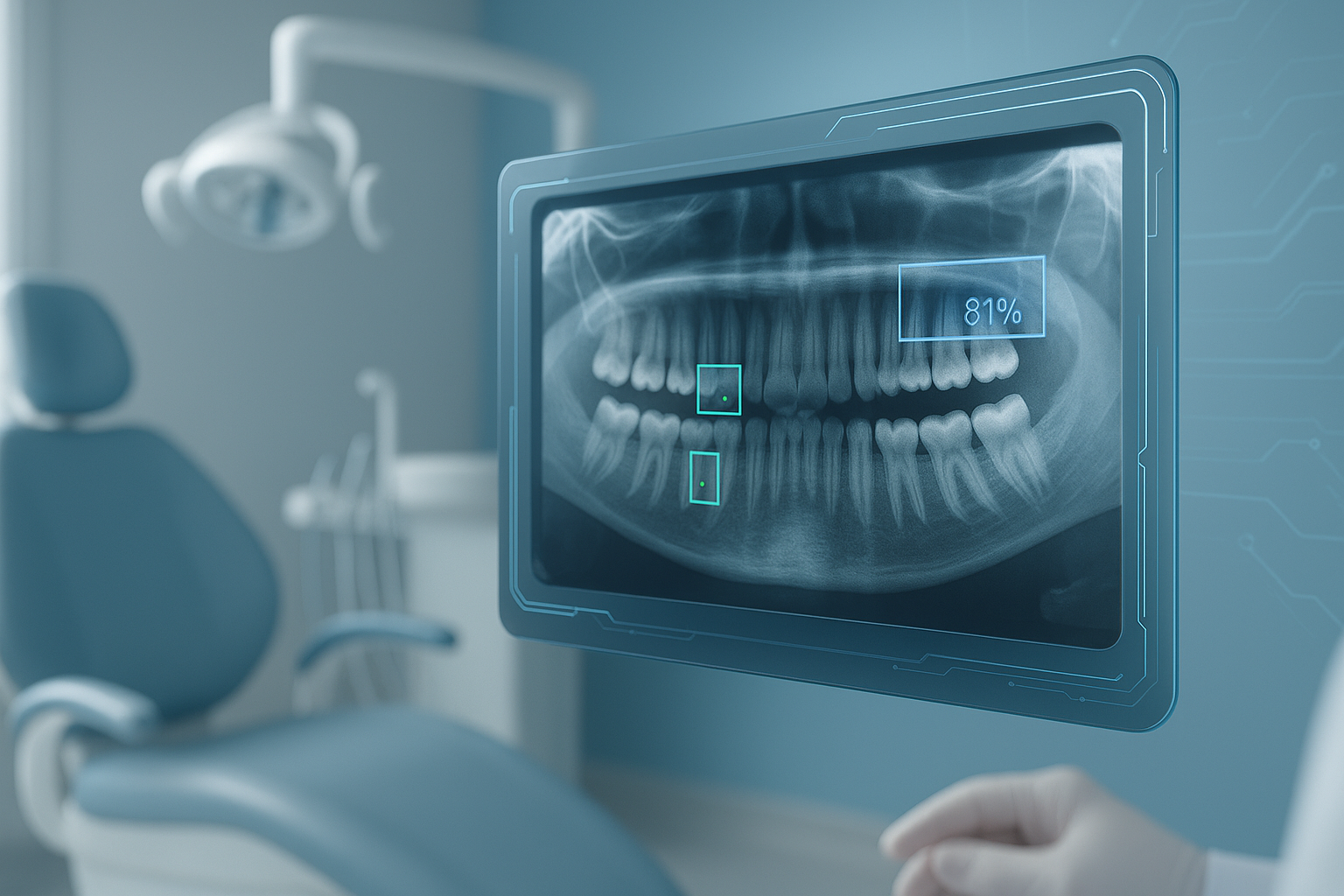
Artificial Intelligence (AI) has become one of the most transformative forces in modern healthcare — and dentistry is no exception. Over the past decade, AI-driven systems have evolved from simple diagnostic aids to powerful image-analysis tools capable of detecting anomalies that even the most experienced clinicians might miss. Among emerging innovations, Nerovet AI Dental stands out as a concept that merges AI-assisted dental imaging with veterinary dental diagnostics, bringing advanced machine learning capabilities to both human and animal oral care.
Although relatively new, Nerovet AI Dental represents a shift in how dentists and veterinary professionals interpret X-rays, plan treatments, and communicate with patients or pet owners. This technology exemplifies the next era of data-driven dentistry, where decisions are guided by accuracy, consistency, and speed.
What Is Nerovet AI Dental?
Nerovet AI Dental is an intelligent software system that integrates machine learning, computer vision, and radiographic image analysis to assist clinicians in identifying oral pathologies. Its AI algorithms are designed to scan dental images—whether from human patients or veterinary subjects—and automatically detect signs of issues such as:
-
Dental caries (tooth decay)
-
Bone loss and periodontal disease
-
Periapical abscesses and cysts
-
Retained roots or unerupted teeth
-
Fractures and resorptive lesions (in veterinary cases)
Unlike conventional dental software, Nerovet AI Dental aims to go beyond image management by interpreting diagnostic data, highlighting potential issues in real time, and presenting annotated visuals that guide clinical decision-making.
What makes Nerovet unique is its dual-purpose design—useful both in human dentistry and veterinary dental practices. This broader scope makes it a valuable innovation in an often-overlooked niche: the intersection of medical and animal health imaging.
How Nerovet AI Dental Works
At its core, Nerovet AI Dental uses a deep convolutional neural network (CNN) trained on thousands of annotated dental radiographs. These images come from diverse datasets representing different species, tooth types, and diagnostic conditions. Here’s a simplified view of how the system functions:
-
Image Ingestion and Preprocessing
The software first imports radiographs (2D or 3D) from various devices such as intraoral sensors, panoramic units, or CBCT scanners. The system then standardizes brightness, contrast, and scale to ensure uniformity. -
AI-Based Image Segmentation
The algorithm segments the radiograph into regions of interest — enamel, dentin, pulp, alveolar bone, and surrounding soft tissues. In veterinary images, it accounts for species-specific variations in dental anatomy. -
Feature Extraction and Detection
Using pattern recognition, the AI identifies anomalies like dark spots (indicating decay), bone density changes, and irregular root morphology. Each finding is assigned a confidence score, helping clinicians judge the reliability of the AI’s suggestion. -
Visualization and Reporting
Detected areas are highlighted with color overlays, and the system generates a structured report summarizing findings. This includes risk assessments, suggested next steps, and even longitudinal comparisons if prior images exist. -
Human Verification and Decision Support
The dentist or veterinary professional reviews AI suggestions before finalizing diagnoses. Nerovet AI Dental emphasizes collaboration between clinician and machine, rather than replacement of human judgment.
Core Features of Nerovet AI Dental
1. Real-Time Radiograph Analysis
The software processes digital X-rays within seconds, identifying potential issues immediately. This eliminates long manual review times and improves workflow efficiency.
2. Dual-Mode Functionality
Designed for both human and veterinary dentistry, Nerovet AI Dental can adapt to varied anatomical structures. Whether it’s a canine molar or a human premolar, the system detects pathologies relevant to each species.
3. Cloud-Based and Local Deployment Options
Clinics can choose between on-premise installation (ideal for large hospitals) or secure cloud-based access (for smaller dental or vet practices). Cloud deployment supports multi-location data access and updates.
4. Integration with Dental Practice Management Systems (PMS)
Nerovet integrates seamlessly with most PMS and imaging suites. It imports patient data, associates radiographs with treatment plans, and syncs reports for easy documentation.
5. AI-Powered Patient Communication
One of the most innovative aspects is the system’s ability to visualize diagnoses. Dentists can show patients (or pet owners) where decay or bone loss exists using color overlays—enhancing understanding and treatment acceptance.
6. Continuous Learning and Model Improvement
Every confirmed diagnosis improves the AI’s accuracy through federated learning. Over time, Nerovet AI Dental evolves, adapting to new data and imaging technologies without compromising privacy.
Applications in Human Dentistry
1. Caries Detection
AI-assisted caries detection has been shown to improve diagnostic accuracy by up to 15–20% compared to manual interpretation. Nerovet’s algorithm analyzes density changes in enamel and dentin to flag early-stage cavities that may otherwise be missed.
2. Periodontal Assessment
By evaluating bone levels and pattern distribution, Nerovet helps clinicians stage periodontal disease more precisely. It can even track progression across multiple visits.
3. Endodontic and Implant Planning
3D CBCT analysis allows the AI to assess root canal morphology, periapical lesions, and bone density, aiding in endodontic treatment and implant positioning.
4. Orthodontic Evaluation
Nerovet can measure tooth angulations and detect impactions, supporting orthodontists in planning precise interventions.
5. Preventive Dentistry
With early detection, the system supports preventive care models—allowing patients to act before conditions worsen, reducing costs and discomfort.
Applications in Veterinary Dentistry
Veterinary oral health is often underestimated, yet animals experience many of the same conditions as humans—sometimes worse due to late detection. Nerovet AI Dental bridges this diagnostic gap.
1. Canine and Feline Radiograph Analysis
Veterinarians can upload dental radiographs of pets for automated screening. The AI identifies issues such as retained roots, fractures, and resorptive lesions—conditions that frequently go unnoticed during manual reviews.
2. Breed-Specific Anomaly Recognition
Certain dog breeds (e.g., brachycephalic breeds like Bulldogs) have unique skull and tooth structures. Nerovet’s training includes breed-specific data, allowing better pattern recognition and tailored analysis.
3. Anesthesia Efficiency
Reducing review time helps shorten procedures requiring anesthesia, improving safety for pets and efficiency for clinics.
4. Educational Support for Veterinary Students
In academic settings, Nerovet serves as a training assistant, offering guided examples and AI explanations that reinforce diagnostic learning.
Benefits of Nerovet AI Dental
-
Enhanced Diagnostic Accuracy:
Reduces human error by detecting subtle anomalies invisible to the naked eye. -
Time Efficiency:
Cuts radiograph analysis time by 50–70%, allowing more focus on patient care. -
Standardization:
Ensures consistent diagnostic quality across practitioners and facilities. -
Improved Patient Communication:
Visual overlays make it easier for patients (and pet owners) to understand findings. -
Early Detection and Preventive Care:
Identifies pathologies at earlier stages, improving long-term outcomes. -
Data-Driven Decision Making:
Clinicians can track diagnostic metrics, monitor AI performance, and benchmark clinical results. -
Cost Efficiency:
Although AI integration requires investment, time savings and higher case acceptance rates often offset costs within a year.
Challenges and Limitations
Despite its promise, Nerovet AI Dental—like all AI-driven systems—faces several challenges.
1. Data Diversity
AI models require large, diverse datasets to perform accurately across demographics and species. If training data lacks representation, diagnostic performance can be biased or inconsistent.
2. Regulatory Hurdles
AI in dentistry is subject to stringent medical regulations. Any clinical use requires compliance with authorities such as the U.S. FDA, European MDR, or local veterinary boards.
3. Integration Complexity
Older dental software or imaging devices may not support modern AI APIs, making integration a technical challenge for legacy systems.
4. Clinician Trust and Adoption
Many professionals remain cautious about relying on AI. Building trust requires transparent validation studies, peer-reviewed data, and clear explainability features.
5. Data Security and Privacy
Since patient radiographs are sensitive data, robust encryption and compliance with regulations like HIPAA (for humans) and GDPR (for international users) are non-negotiable.
How Nerovet AI Dental Aligns with Modern Dental Trends
The global dental AI market is expanding rapidly. According to Statista and Grand View Research (2025), the dental AI sector is projected to exceed $2.8 billion by 2030, growing at over 25% CAGR. This surge is driven by increasing adoption of digital dentistry, CBCT imaging, and demand for faster diagnostics.
Nerovet AI Dental’s focus on both human and veterinary markets gives it a unique advantage. The veterinary AI space, though smaller, is growing at a comparable rate due to the rising focus on animal wellness and pet healthcare digitization.
The software aligns with several 2025 trends:
-
AI-powered chairside diagnostics
-
Data integration with electronic health records (EHRs)
-
Cloud-based collaboration between multi-site clinics
-
Preventive care through predictive analytics
-
Cross-species learning models in medical AI
Ethical and Professional Considerations
While AI can elevate diagnostics, the ethical responsibility remains with the clinician. Nerovet AI Dental reinforces this by providing explainable AI (XAI) outputs. Each detection includes a reasoning layer that visually shows why the algorithm flagged a region.
This transparency allows professionals to verify AI conclusions before discussing them with patients or owners—preserving human oversight while benefiting from machine precision.
Ethically, AI in healthcare should always meet three conditions:
-
Accountability: Clinicians must remain the final decision-makers.
-
Transparency: AI must explain its logic in understandable terms.
-
Fairness: Training data must be unbiased across populations and species.
Nerovet AI Dental’s design philosophy appears to align with these standards, making it both clinically useful and ethically responsible.
Implementation Roadmap for Clinics
Adopting AI in a dental or veterinary clinic requires a structured rollout:
-
Assessment Phase
-
Identify workflow bottlenecks where AI could add value.
-
Ensure hardware compatibility with imaging systems.
-
-
Training and Calibration
-
Train staff on interpreting AI overlays and confidence levels.
-
Compare AI output against manual reads for a sample set of cases.
-
-
Pilot Deployment
-
Run Nerovet AI Dental in “shadow mode” (non-decisive mode) to validate accuracy.
-
Collect performance metrics and feedback.
-
-
Full Integration
-
Integrate with practice management software.
-
Use AI reports as part of standard patient documentation.
-
-
Continuous Monitoring
-
Audit AI performance regularly.
-
Update software to include new learning models.
-
Future of Nerovet AI Dental
The roadmap for Nerovet AI Dental—and dental AI in general—points toward predictive dentistry. Future versions are expected to incorporate:
-
3D volumetric analysis for CBCT data.
-
Predictive models estimating the likelihood of disease progression.
-
Integration with genetic and salivary biomarkers for early detection.
-
Multi-species datasets, improving veterinary AI reliability.
As AI becomes more transparent and standardized, tools like Nerovet AI Dental could soon become as essential as the dental explorer or X-ray sensor itself.
Read Also: Esports News Dualmedia: Redefining Gaming Journalism
Conclusion: A Smarter, More Connected Future for Oral Health
Nerovet AI Dental symbolizes more than a software—it represents the fusion of technology, biology, and data intelligence to redefine how we approach oral care for both humans and animals. With its capacity to enhance accuracy, save time, and support preventive care, it embodies the shift toward intelligent dentistry.
However, as with all AI tools, success depends on evidence, ethics, and education. Clinicians who embrace AI responsibly—verifying findings, understanding limitations, and maintaining human judgment—will lead the next generation of oral health professionals.
The AI revolution in dentistry is not about replacing dentists or veterinarians—it’s about augmenting their expertise with precision, speed, and data-driven confidence. And Nerovet AI Dental, if developed and validated responsibly, could be one of the key drivers of that transformation.