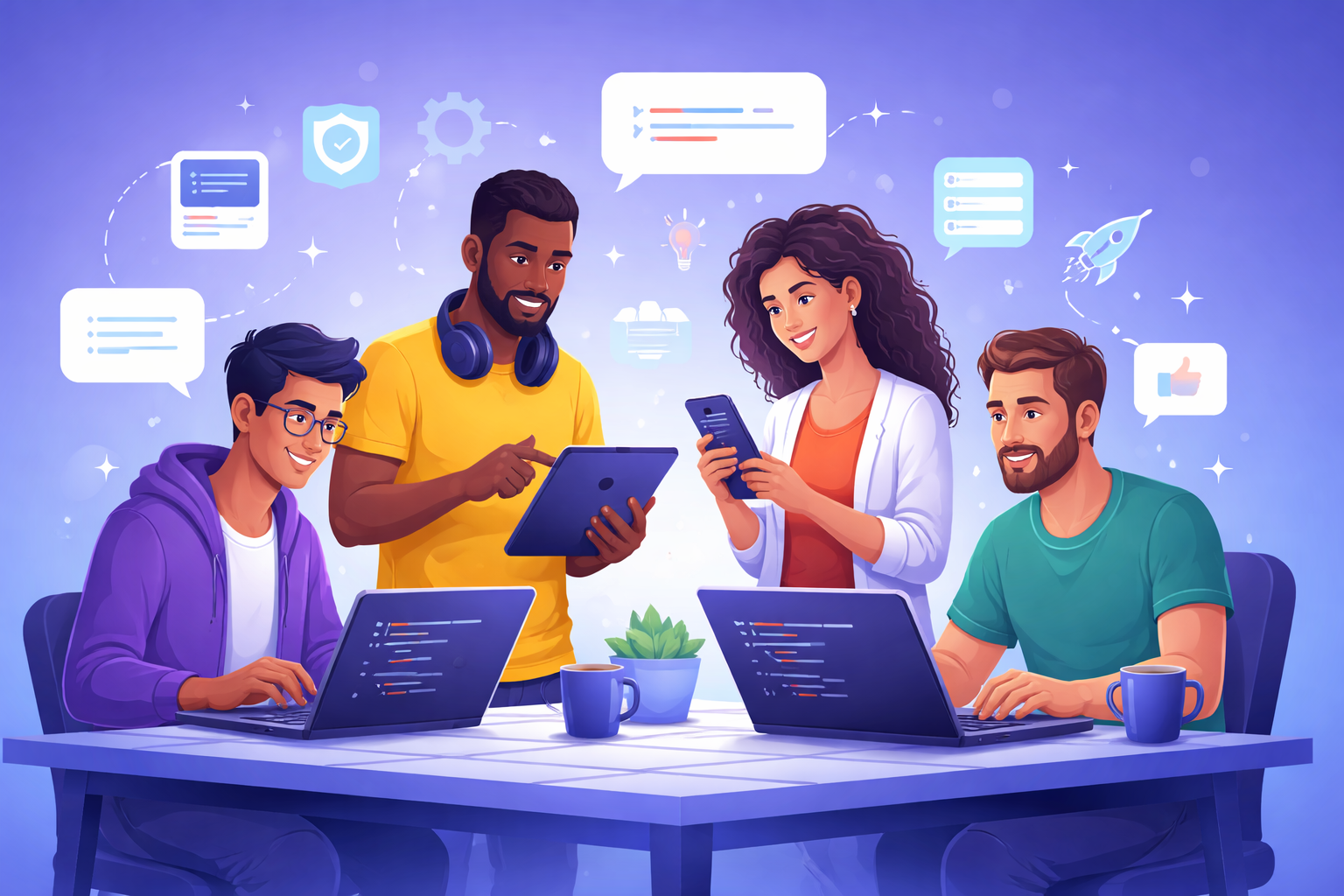
In the last decade, developers have gained access to more learning material, tools, and online communities than ever before. Paradoxically, many programmers feel more isolated and overwhelmed than at any other time. General social platforms are noisy, fast, and optimized for attention rather than understanding. Traditional forums can feel intimidating or outdated. Against this backdrop, ProgramGeeks Social has emerged as a focused space designed to bring programmers together around learning, collaboration, and professional growth, without the distractions that often derail progress.
This article explores what ProgramGeeks Social represents, why developer-focused social platforms matter in today’s tech landscape, and how programmers at different stages can realistically use such a community to improve skills, confidence, and career outcomes.
The idea behind ProgramGeeks Social
ProgramGeeks Social is best understood as a developer-centric social environment rather than a general-purpose network. The underlying philosophy is simple: programmers learn best when they can observe real work, ask honest questions, and share progress without performing for algorithms or mass audiences. Instead of viral trends or lifestyle updates, the emphasis is on code, problem-solving, and experience-driven discussion.
The platform concept is closely associated with the broader ProgramGeeks ecosystem, which focuses on programming education, tutorials, and technical knowledge. ProgramGeeks Social extends that educational mission into a more interactive, community-driven space, where learning is not only consumed but discussed, challenged, and refined through conversation.
Why developer-only social spaces matter now
Software development has changed dramatically in recent years. New frameworks appear constantly, AI tools accelerate coding, and job markets fluctuate across regions. While documentation and courses remain essential, they are no longer sufficient on their own. Developers increasingly rely on peers to interpret trends, validate decisions, and share real-world context that static resources cannot provide.
General social networks struggle to support this kind of depth. Algorithms reward speed and engagement, not accuracy or nuance. As a result, technical conversations are often fragmented or oversimplified. Developer-only communities, by contrast, create an environment where context is assumed, jargon is acceptable, and long-form explanations are valued. ProgramGeeks Social fits squarely into this need for slower, more meaningful technical dialogue.
Learning as a shared experience
One of the strongest arguments for a platform like ProgramGeeks Social is the shift from isolated learning to shared learning. Many programmers begin their journey alone, following tutorials late at night or copying examples without fully understanding them. While this works initially, it becomes limiting as problems grow more complex.
Within a developer social space, learning becomes conversational. A developer can describe what they are trying to achieve, explain what went wrong, and receive feedback that reflects real experience rather than theoretical answers. This kind of interaction shortens the gap between knowing something exists and knowing how to use it effectively.
Over time, shared learning also builds confidence. Seeing others struggle, adapt, and improve makes difficulty feel normal rather than personal. That psychological safety is one of the most underrated benefits of focused programming communities.
Collaboration beyond open source
Open-source projects remain a powerful way to collaborate, but they are not always welcoming or accessible to beginners. Large repositories can feel overwhelming, and contribution standards may be unclear to newcomers. ProgramGeeks Social encourages collaboration at multiple levels, not only through formal repositories but also through small, informal projects and idea exchanges.
This kind of collaboration reflects how real development teams operate. Developers discuss ideas before writing code. They review each other’s approaches. They make mistakes in low-risk environments before applying lessons to production systems. A social layer designed specifically for programmers makes these interactions easier and more natural.
Professional growth without self-promotion fatigue
Career development is an unavoidable concern for most developers, yet many feel uncomfortable promoting themselves online. Traditional platforms often reward exaggerated achievements or polished personal branding, which can discourage honest reflection. ProgramGeeks Social approaches professional growth from a different angle by emphasizing progress rather than performance.
In this environment, sharing a partially completed project or a lesson learned from a failed attempt is not a weakness. It is a contribution. Over time, these small signals of growth build credibility more effectively than curated highlight reels. Recruiters and peers alike tend to trust developers who show their thinking process and evolution.
The role of discussion and long-form thinking
Modern internet culture favors short posts and instant reactions, but software development rarely fits into that mold. Complex systems require explanation, trade-off analysis, and historical context. ProgramGeeks Social creates room for longer discussions that reflect how developers actually think.
Instead of reducing problems to quick fixes, conversations can explore why a solution works, when it fails, and what alternatives exist. This depth is especially valuable for intermediate developers who have moved beyond syntax but are still developing architectural judgment. Engaging with thoughtful discussion accelerates that transition.
Navigating AI and automation together
Artificial intelligence has become deeply integrated into modern programming workflows. Tools that generate code, suggest fixes, or refactor functions are now commonplace. While these tools increase productivity, they also raise new questions about correctness, security, and long-term maintainability.
A community like ProgramGeeks Social provides a space to collectively interpret AI-assisted development. Developers can compare experiences, share pitfalls, and discuss best practices for combining human judgment with automated output. These conversations help prevent blind reliance on tools and encourage responsible, informed use.
Building a sense of belonging in tech
Beyond skills and careers, there is a human dimension to developer communities that is often overlooked. Many programmers work remotely, freelance, or study independently. Without a sense of belonging, motivation can fade, even when opportunities are abundant.
ProgramGeeks Social addresses this by framing participation as membership in a shared craft rather than competition for attention. Regular interaction, familiar usernames, and ongoing conversations create continuity. Over time, the platform becomes less about consuming content and more about participating in a living network of people who care about building things well.
How different developers can benefit
The value of ProgramGeeks Social varies depending on where a developer is in their journey. Beginners gain reassurance and direction, learning that confusion is part of the process. Intermediate developers refine their thinking by explaining concepts to others and receiving critique. Experienced developers stay sharp by mentoring, debating ideas, and encountering perspectives outside their usual circles.
This layered value is what sustains healthy communities. When each group benefits in a different way, participation remains balanced and meaningful rather than extractive.
Trust, accuracy, and community responsibility
No online platform is immune to misinformation, and technical communities are no exception. Advice shared casually can have serious consequences when applied to security-sensitive or production systems. A strong developer community depends on shared responsibility for accuracy and transparency.
ProgramGeeks Social, like any serious programming space, benefits from norms that encourage citing sources, acknowledging uncertainty, and correcting mistakes openly. These practices reinforce trust and ensure that the community remains a reliable place to learn rather than a source of risky shortcuts.
The long-term value of focused developer networks
As technology continues to evolve, developers will need more than documentation and tools. They will need interpretation, perspective, and human judgment. Focused social platforms provide that layer by connecting people who face similar challenges and speak a shared technical language.
ProgramGeeks Social represents this shift toward intentional, craft-oriented communities. It is less about broadcasting and more about dialogue. Less about visibility and more about value. In a digital world saturated with noise, that focus is not just refreshing; it is necessary.
Conclusion
ProgramGeeks Social reflects a growing recognition that programmers need spaces designed around how they actually learn and work. By prioritizing technical discussion, shared growth, and meaningful collaboration, it offers an alternative to mainstream social platforms that often distract more than they help.
Its true impact, however, depends on how developers choose to use it. When treated as a place to learn in public, ask thoughtful questions, and support others, it can become a powerful extension of a programmer’s professional life. In an era defined by rapid change and constant information, communities that value depth, honesty, and shared progress will continue to matter, and ProgramGeeks Social fits squarely within that future.