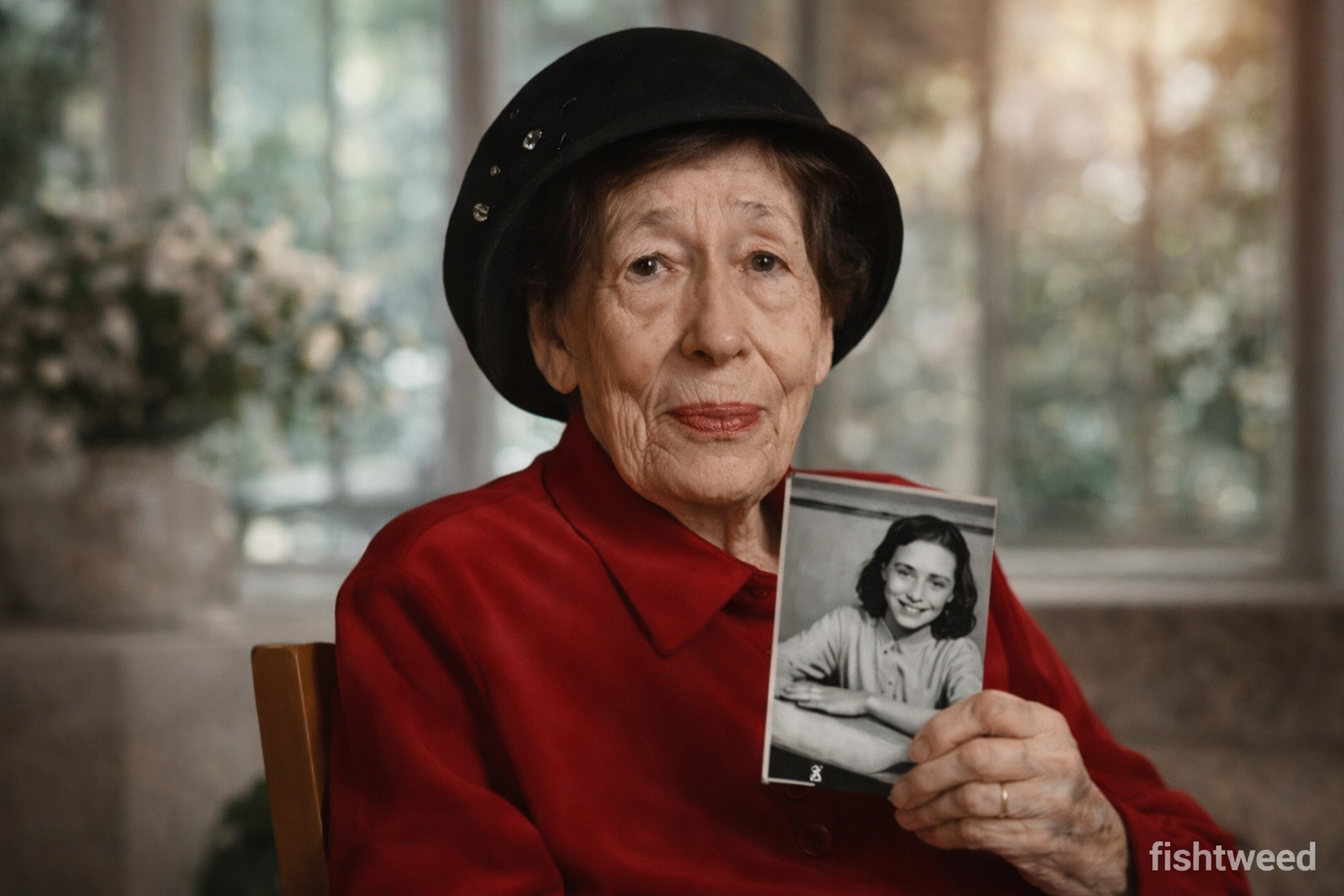
Some lives enter history books in large type. Others remain in the margins, even when they carry extraordinary meaning. Gabi Goslar belongs to the second group. Her name is often mentioned beside Anne Frank and Hannah Pick-Goslar, yet her own story deserves to be understood on its own terms. It is the story of a child born into a loving Jewish family, swept into the violence of the Holocaust before she was old enough to understand it, and carried forward through survival, loss, and memory.
For many readers, interest in Gabi Goslar begins with Anne Frank. That connection is real, but it is only part of the picture. Gabi was the younger sister of Hannah Pick-Goslar, one of Anne Frank’s closest childhood friends. Through that family bond, her life sits close to one of the best-known stories of the twentieth century. Still, Gabi’s biography is more than a side note to someone else’s fame. Her life reflects the fate of many Jewish children whose names were never widely known, even though their experiences reveal the full human scale of Nazi persecution. Anne Frank House records that Gabi, born Rahel Gabriële Ida Goslar in Amsterdam on October 25, 1940, was Hannah’s younger sister and part of the Goslar family circle that was close to the Franks.
Early Life in Amsterdam
Gabi Goslar was born in Amsterdam during a period when Europe was already being torn apart by war. Her family had originally fled Germany after Adolf Hitler rose to power. Like many Jewish families seeking safety, the Goslars moved to the Netherlands in the hope of building a new life. In Amsterdam, they settled near the Frank family. Their daughters, Hannah and Anne, became close as children, and the two families developed warm ties in everyday life. Anne Frank House describes the Goslars as part of that same neighborhood world in Amsterdam, a setting that now feels painfully fragile in hindsight.
Because Gabi was born in 1940, she entered childhood at the very moment when Jewish life in the Netherlands was becoming more restricted and dangerous. She did not experience a calm, secure early childhood in the way most children do. Instead, her first years unfolded under occupation, fear, and growing isolation. Her birth came at a time when Jewish families were already being pushed out of public life, cut off from normal routines, and forced to live under rules designed to strip them of freedom and dignity.
Even so, the Goslar family remained a family first, not just a historical case. There were parents trying to protect their children, meals to prepare, worries to hide, and small daily moments that still mattered. That is part of what gives Gabi Goslar’s biography its emotional force. Before the camps and the separation, there was a home. Before history turned violent, there was a child simply growing up.
Family Loss Before Deportation
One of the deepest tragedies in Gabi’s early life came before deportation. Yad Vashem states that in October 1942, while giving birth, Hannah and Gabi’s mother died, and the baby also died. For a family already living under Nazi persecution, this was a devastating blow. It meant that Gabi lost her mother when she was still a toddler. It also meant that the emotional center of the family was broken apart before the next stages of suffering began.
This loss shaped everything that followed. In many Holocaust biographies, we focus on transport lists, camp dates, and liberation. Those facts matter, but they can hide the private grief inside them. For Gabi Goslar, her biography is also the story of a little girl who entered the most dangerous period of her life after already losing her mother. That fact alone changes how we read her story. She was not just a child survivor. She was a child survivor who had already been marked by family tragedy.
Arrest and Deportation
The Goslar family’s world narrowed even further in 1943. Yad Vashem records that on June 20, 1943, Hannah, Gabi, their father, and their grandfather were arrested and sent to Westerbork transit camp. Once there, Hannah and Gabi were separated from their father and placed in the orphanage. This detail is striking and heartbreaking. Gabi was still a very young child, yet she was absorbed into a system built to destroy Jewish family life piece by piece. (yadvashem.org)
The word “orphanage” can sound gentle to modern ears, but in the context of Westerbork it meant something very different. It meant institutional survival inside a machinery of persecution. It meant uncertainty and loss, not comfort. For Hannah, who was much older, it also meant carrying a protective role toward her younger sister. For Gabi, it meant learning the world through absence, hunger, and instability.
From Westerbork, the family was later deported to Bergen-Belsen. Anne Frank House notes that Hannah and her younger sister Gabi were among the only members of their family to survive the camps. That survival is both extraordinary and painful. It tells us that Gabi lived through one of the worst systems of organized cruelty in modern history, but it also reminds us that survival came at immense human cost. (annefrank.org)
A Child’s Experience of Bergen-Belsen
Gabi Goslar was too young to leave behind the kind of detailed testimony older survivors sometimes could. Yet that does not make her experience less important. In some ways, it makes it more haunting. Her biography stands for a generation of children whose suffering was real but only partly captured in words. They survived events they were barely old enough to understand. Their memories, when preserved at all, often came through relatives, archives, and later family accounts.
Bergen-Belsen has become known in public memory as the place where Anne Frank and her sister Margot died. But it was also the place where the Goslar sisters endured disease, hunger, fear, and the collapse of all normal life. Hannah’s later testimony has helped historians and readers understand that world more clearly. Through her, we also glimpse the reality that surrounded Gabi. She was not an observer of history. She was one of its smallest and most vulnerable victims.
This is one reason Gabi Goslar’s biography deserves attention. It widens our view of the Holocaust beyond the few names that became universal symbols. It reminds us that the camps were filled not only with diarists and witnesses, but with very young children whose stories survive in fragments. Those fragments matter because they restore truth to scale.
The Connection to Anne Frank
It is impossible to discuss Gabi Goslar without acknowledging the Anne Frank connection, because that is how many readers first encounter her name. Anne Frank House documents that Hannah Goslar was one of Anne Frank’s childhood friends, and that the Goslar and Frank families knew each other in Amsterdam before deportation. Hannah later became one of the most important witnesses to Anne’s final months, recalling their meeting across a fence in Bergen-Belsen. Gabi, as Hannah’s younger sister, belonged to that same family history.
Yet Gabi’s biography should not be reduced to a supporting role in Anne Frank’s story. Doing that would repeat a common mistake in Holocaust memory: allowing one famous figure to eclipse the wider human world around her. Gabi’s life helps readers understand that Anne Frank existed within a larger community of Jewish children and families, many of whom suffered similar losses without ever becoming globally known.
In that sense, Gabi Goslar matters not because she stands next to a famous name, but because her life brings back the people history nearly lost from view.
Survival and Rebuilding After the War
Liberation did not instantly restore normal life. For child survivors, the end of the war often marked the beginning of another struggle: finding surviving relatives, crossing borders again, and trying to rebuild identity after years of terror. Anne Frank House records that with Otto Frank’s help, Hannah and Gabi were reunited with their uncle Hans Klee in Switzerland on December 5, 1945. That reunion shows how postwar survival was never simple. It required intervention, care, and a long process of piecing family life back together.
This is one of the most moving parts of Gabi Goslar’s biography. She survived the war, but survival did not mean returning to the old home and resuming ordinary childhood. Her mother was gone. Much of the family network had been destroyed. Europe itself had changed. Rebuilding meant starting over in a world filled with absence.
There is something deeply human in that image of two sisters being reunited with an uncle in Switzerland after everything they had endured. It is not a dramatic cinematic ending. It is quieter than that. But perhaps that is why it feels so true. History is often rebuilt in small rooms, through relatives, paperwork, waiting, and the fragile return of trust.
Why Gabi Goslar’s Story Still Matters
In recent years, more readers have searched for lesser-known lives connected to Anne Frank, and that curiosity is meaningful. It suggests that people want more than a single symbolic story. They want context. They want the wider human landscape. Gabi Goslar’s biography offers exactly that. It shows how one family lived close to the Franks, suffered similar persecution, and carried its own burden of grief and survival.
Her life also matters because Holocaust memory is becoming harder to preserve with each passing year. As the survivor generation disappears, the responsibility of remembering shifts to archives, educators, museums, writers, and readers. Stories like Gabi’s help prevent memory from becoming too narrow or too polished. They bring back the rough edges of real life. They remind us that history was lived by ordinary families, frightened children, and people whose names were never meant for textbooks.
Gabi Goslar’s biography is therefore important not only for what it tells us about the past, but for what it asks of the present. It asks readers to notice the quiet names. It asks us to look beyond the headline figures and understand that tragedy is always larger than the one face most people remember.
Conclusion
Gabi Goslar’s life was shaped by exile, family loss, deportation, and survival. Born into a Jewish refugee family in Amsterdam, she spent her earliest years under the shadow of Nazi persecution. She lost her mother as a small child, was arrested with her family, endured Westerbork and Bergen-Belsen, and survived a system designed to erase people like her. Later, with help from those who remained, she and her sister found a path back to family life in Switzerland.
What makes her biography so moving is its quietness. Gabi Goslar is not remembered through a famous diary of her own. She is remembered through family history, survivor testimony, and archival record. Yet that quiet record speaks powerfully. It tells us that history is not made only of the stories that became world-famous. It is also made of children like Gabi, whose lives carried the same weight of fear, loss, and endurance.
To read about Gabi Goslar is to understand the Holocaust more fully. It is to see the human world around Anne Frank, and beyond Anne Frank. And it is to remember that every lesser-known name still belonged to a full and precious life.