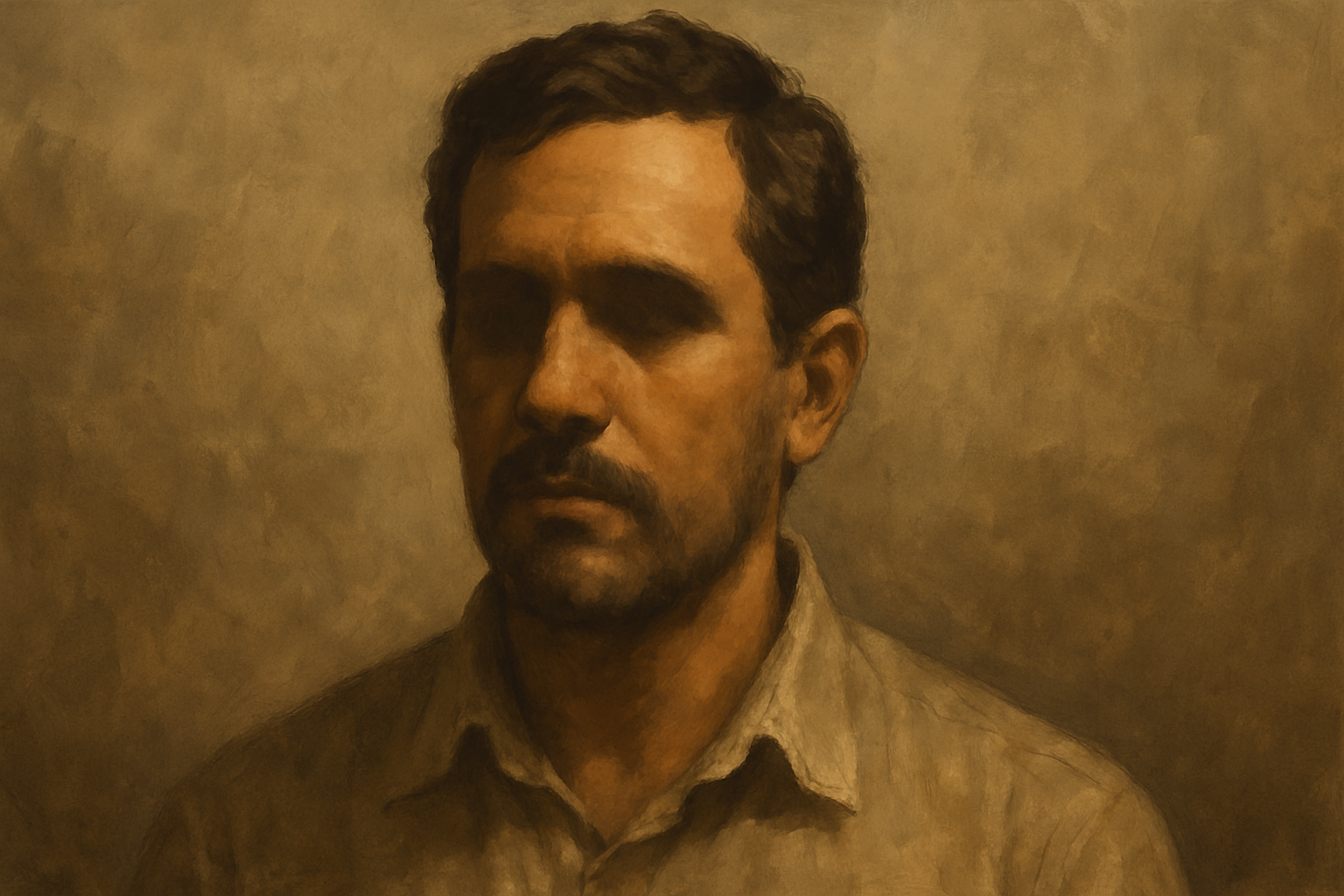
When a name repeatedly appears online but leaves behind no reliable documentation, curiosity takes over. That’s the case with Juan Ramirez Montroso.
Is he a Guatemalan sculptor born in 1932? A philosopher who explored ethics and emotional design? A tragic victim of a Montana police shooting in 2014? Or is he none of these things — a mythical figure born of viral storytelling?
This article explores all available angles, separating evidence from speculation, and asking what the mystery of Juan Ramirez Montroso reveals about truth, narrative, and digital identity in today’s world.
The Rise of Juan Ramirez Montroso Online
Around 2024–2025, the name Juan Ramirez Montroso began trending across blogs, speculative news sites, and discussion forums. Articles claimed he was:
-
A Guatemalan artist with deep ties to indigenous culture.
-
A cultural figure who influenced identity and heritage debates.
-
A tragic victim of police brutality in Montana.
-
A philosopher and innovator associated with technology ethics.
Yet, none of these articles pointed to primary documentation such as museum catalogs, police records, or scholarly publications. Instead, they cited each other in circular fashion — a hallmark of digital myth-making.
Conflicting Biographical Claims
The heart of the mystery lies in the contradictions. Let’s examine the main narratives.
Birth and Heritage
Several sites claim Montroso was born in 1932 in Guatemala, often linking his identity to Mayan heritage. This biographical detail supports the portrayal of him as a cultural artist deeply rooted in tradition.
But no verifiable birth records, institutional profiles, or regional registries confirm his existence.
Artist and Sculptor Identity
Some narratives describe him as a sculptor of indigenous art, blending traditional themes with modern techniques. His supposed work celebrates resilience, heritage, and community pride.
Yet, searches through museum collections, art databases (like Artnet), and cultural exhibition archives yield no official listings of his works. If he were truly a globally recognized sculptor, at least some trace should exist.
The Montana Police Incident
The most dramatic story claims Montroso died in Billings, Montana in 2014, shot by officer Grant Morrison during a traffic stop.
-
According to these accounts, he was unarmed and the event sparked outrage.
-
However, no credible police records, news reports, or court documents confirm the event involving that name.
This suggests the claim may be conflated with real incidents of police shootings but incorrectly attributed to Montroso.
Philosopher and Think Tank Founder
Other accounts portray him as a philosopher of ethics, with ideas like:
-
The Emotional City: a framework for designing empathetic societies.
-
Ethosyn: a think tank dedicated to technology and morality.
But again, no published works, academic papers, or think tank websites verify these attributions. They appear to be creative constructs rather than documented contributions.
3Searching for Verifiable Evidence
To test credibility, researchers have looked in three main areas.
Academic Databases
-
JSTOR, ProQuest, Google Scholar: no results show Montroso as an author, cited scholar, or subject of serious academic writing.
Media Archives
-
Searches of major outlets — The New York Times, BBC, El País — reveal no mention of him.
-
Even regional outlets in Montana do not record the alleged 2014 shooting.
Public Records
-
Birth registries, immigration databases, and court documents yield no trace of Juan Ramirez Montroso.
Conclusion: No credible institutional record verifies his existence as described.
Four Theories Explaining the Name
Given the contradictions, four main theories emerge.
Theory 1: A Real but Obscure Individual
Perhaps he existed but never achieved major recognition. His story could have been amplified inaccurately by blogs seeking intrigue.
Theory 2: A Pseudonym or Composite Persona
Writers may have stitched together traits of multiple real people, publishing under a single pseudonym. The myth grew from there.
Theory 3: A Digital Folklore Creation
Montroso may be purely fictional, born as a storytelling exercise or SEO experiment, later escaping into mainstream curiosity.
Theory 4: A Case Study in Misinformation
The simplest explanation: his story demonstrates how misinformation multiplies online when fact-checking is absent.
Why Do People Believe? (Psychology of Myths)
Several cognitive biases explain why the myth caught traction:
-
Authority through repetition: if many sites repeat the same claim, it feels true.
-
Narrative bias: people prefer compelling stories over incomplete facts.
-
Cultural resonance: his name feels authentic within Latin heritage.
-
Tragic framing: the police-shooting story adds emotional gravity.
-
SEO amplification: sites profit from clicks, regardless of accuracy.
Lessons from the Case
Misinformation
Montroso shows how easily false or unverified figures can gain traction.
Digital Literacy
Readers must verify sources, not just accept repeated claims.
Narrative Power
Even without truth, stories fulfill psychological and cultural needs.
Identity in the Digital Age
Montroso demonstrates how online identity can be constructed by collective imagination.
FAQs
Q: Was Juan Ramirez Montroso real?
No reliable evidence confirms his existence as a public figure.
Q: Did he die in Montana in 2014?
This claim appears unverified and is likely a misattribution.
Q: Was he a Guatemalan artist?
Some sites say yes, but no institutional records confirm it.
Q: Could he be a pseudonym?
Yes, it is highly plausible he is a composite or fictional figure.
Q: Why does his name trend?
Because mystery, speculation, and repetition make it viral.
Read Also: Caleb James Goddard: Biography of Jack Nicholson’s Son
Conclusion
The legend of Juan Ramirez Montroso is less a biography and more a mirror: it reflects how stories spread faster than facts online.
Whether he was a real artist, a philosopher, a tragic victim, or entirely fictional, his name now belongs to the realm of digital folklore.
The safest conclusion is: Juan Ramirez Montroso is more myth than man. Yet in that myth, we find valuable lessons about truth, curiosity, and the need for critical thinking in the information age.